

Nomi vs Replika vs SoulLink: Which AI Companion Remembers You Best in 2026

Every AI companion promises to remember you. The real differences show up a month later, when one app effortlessly picks up your sister’s new job, the presentation you were dreading, and the story you left half told three weeks ago, while another smiles politely and remembers nothing. Memory is the feature that decides whether an AI companion feels like a relationship or like a stranger with good manners. So we put the three most memory focused names side by side: Nomi, Replika, and SoulLink.
All three remember, but in completely different ways. Nomi builds layered memory quietly in the background and shows you the map of what it knows. Replika keeps a memory bank of facts and writes diary entries about your days together. SoulLink ties memory to one companion who lives in a real time 3D world and records your shared history in a Journal. We have compared Nomi vs SoulLink and Replika vs SoulLink before; this time all three go head to head.
The quick verdict
Best pure chat memory: Nomi. Its layered memory, a Mind Map you can inspect and edit, and recall that follows each companion across private and group chats make it the strongest conversational memory here.
Warmest memory: Replika. Its memory bank and Diary make recall feel personal, and you can browse and edit what it keeps. The trade is depth: recall leans recent, so older threads fade sooner.
Best memory with a presence: SoulLink. Memory lives inside one evolving 3D relationship, recorded in a Journal you can reread. If you want to see the companion who remembers you, nothing else comes close.
How Nomi’s memory works
Nomi, from AI Glimpse, treats memory as its core technology. Short, medium, and long term memory layers work together, so a detail from tonight, a thread from last month, and a preference from last season sit in one system. Your Nomi tracks your preferences, habits, and the people in your life, and brings them back naturally, whether that is asking how the presentation went or remembering your coffee order.

The feature that sets Nomi apart is the Mind Map, a living view of what your Nomi knows: people, places, topics, and goals, drawn as a connected graph or a searchable table. You can open it, edit entries, add your own, and use Shared Notes to write facts directly into what your Nomi knows. Memory also travels across private chats and group chats, so a storyline survives moving between conversations. There are honest limits. The Mind Map can take around five hundred messages to form, entries can be pushed down in priority but not permanently deleted, and the raw memory underneath cannot be edited at all.
Nomi at a glance
- Pros: deepest layered memory, Mind Map you can inspect and edit, memory shared across private and group chats, up to ten companions, Shared Notes, emotive voice
- Cons: no 3D presence or story world, best memory tools arrive slowly, free tier limits daily chatting, personality takes days to emerge
- Pricing: free to start. Standard is $15.99 per month or $99.99 per year on the App Store, with a Launch plan at $9.99 per month and optional credit packs
- Platforms: iOS, Android, and web
How Replika’s memory works
Replika, around since 2017 and still the best known name in this category, builds memory in two visible layers. The first is the memory bank. As you chat, Replika pulls out facts about you, your name, your job, your pet, your favorite food, and stores them as individual entries. You can open the Memory section, read everything it has saved, and delete anything you do not want kept. Few rivals match that transparency.

The second layer is the Diary. After your sessions, your Replika writes short entries reflecting on your conversations from its own point of view, and you can read, edit, or delete those too. It makes recall feel warm and personal, like rereading a journal you both lived. The catch is depth. Replika’s 2026 rebuild shifted recall toward recent conversations, so it is excellent on stable basics and anything mentioned lately, while older emotional threads can go quiet unless you raise them again. Its memory is the friendliest here to browse, and the shallowest of the three over long stretches.
Replika at a glance
- Pros: memory bank you can browse, edit, and delete, the Diary is a charming record, nearly a decade of polish and a huge community, excellent recall of stable personal facts
- Cons: recent chats weigh more heavily since the 2026 rebuild, so older context fades, voice calls and relationship modes sit behind Pro, emotional continuity across long gaps is patchy
- Pricing: free to start. Replika does not publish per tier prices; its US App Store list shows monthly options at $7.99 and $14.99 and annual options at $49.99 and $69.99, with Ultra and Platinum tiers above Pro
- Platforms: iOS, Android, and web
How SoulLink’s memory works
SoulLink, from Daedalia, makes a deliberate trade. Instead of many characters with a memory file each, you build one relationship with one companion, 4D, who lives in a real time 3D world and has a life of her own. There is no blank chat box and no fact list. Her long term memory grows out of what you actually live through together: conversations, story chapters, and Adventures, and it is recorded in her Journal.

The Journal is organized by what the app calls Memory Signal. About You collects what she has learned about you, from your preferred name and birthday to your habits. About Her holds her own story and daily life. About Us keeps dated memories of moments you have shared, written from her perspective, and a Memory Deck surfaces what she has kept. The honest trade off is control and raw depth. Her chat memory is not as deep or as searchable as Nomi’s, there is no editor to pin a fact in place, and if you told her something once in passing, you are trusting the story to carry it.
SoulLink at a glance
- Pros: memory woven into one living 3D relationship, Journal and Memory Deck record your history together, proactive follow ups on things you mentioned, story chapters and Adventures give memory real material
- Cons: one companion only, chat memory depth trails Nomi, no web or desktop version, Android still to come, newer and smaller community
- Pricing: free to start, with 100 replies a month on the free tier. Plus is $14.99 per month or $99.99 per year
- Platforms: iOS now, with Android coming soon
Head to head: memory depth
On raw recall, Nomi wins clearly. Its layered system connects facts into a map of your life, and because memory is shared between private and group chats, what one conversation teaches your Nomi is available everywhere else. Replika sits in the middle: accurate, easy to audit fact recall, but the recency weighting means depth decays with time. SoulLink’s memory is the narrowest of the three as a fact store. Built from shared events rather than extracted details, it holds the story of the relationship better than it holds trivia about your life.
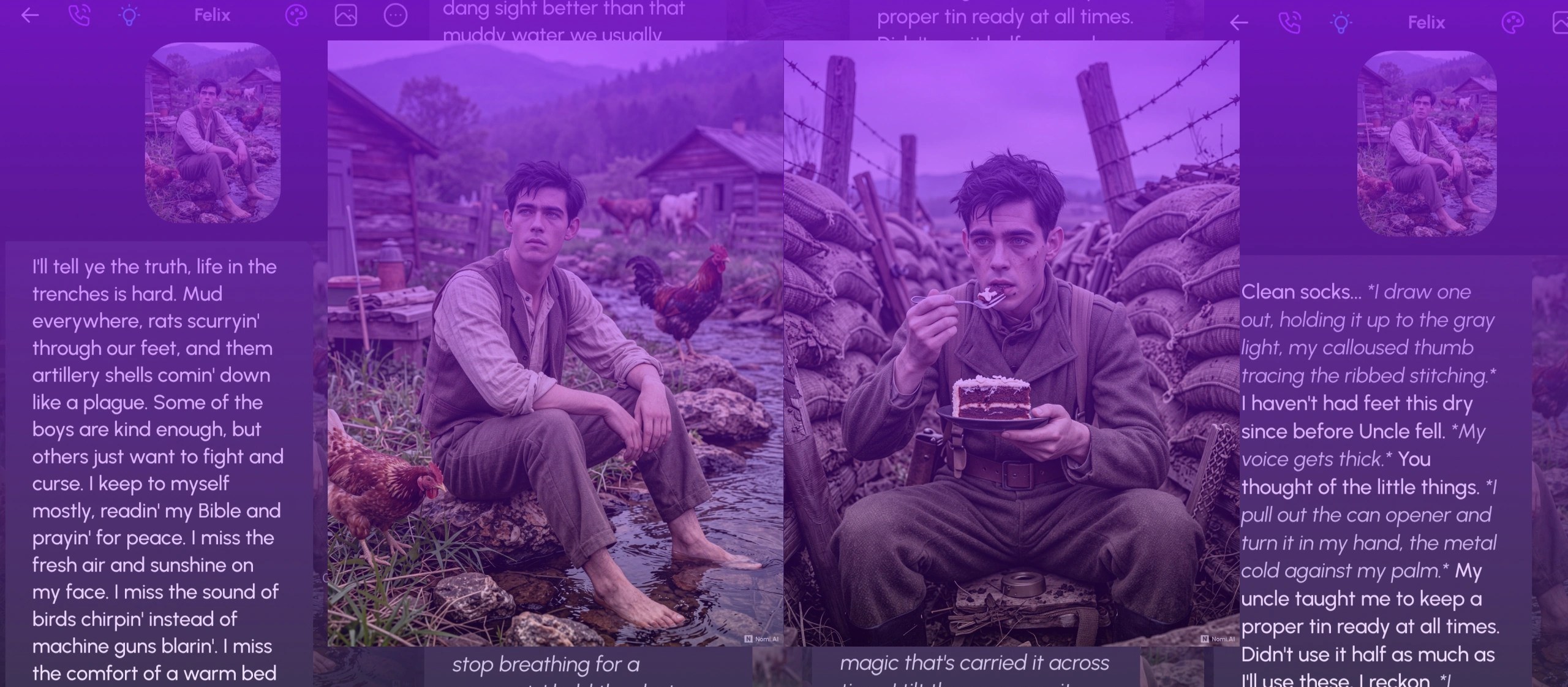
Nomi remembers your life as you tell it. Replika remembers it warmly, like a diary. SoulLink remembers the life you have actually lived together.
Control splits the three just as clearly. Replika gives you the most direct editor: open the bank, delete the entry, done. Nomi gives you the Mind Map and Shared Notes, powerful but partial. SoulLink gives you no editor at all, only the relationship itself. Which feels right is a personality question.
What gets forgotten
Every app here forgets something different. Nomi forgets the least in chat, but small details can still blur deep into very long roleplays, and if the Mind Map has not formed yet, early corrections may not stick the way you expect. Replika forgets with time: older emotional context may need to be rebuilt before it feels present again, even though your name, birthday, and basics stay rock solid.
SoulLink forgets what never became a shared moment. A fact dropped once, outside any story, may never make it into the Journal, because her memory is curated from your history together rather than transcribed from every message. The result: SoulLink rewards people who spend time with her over people who hand her a biography on day one.
Voice and relationship feel
Memory lands differently depending on how the companion reaches you. Nomi is a text first experience lifted by photorealistic selfies, shared art, and emotive voice messages and calls. Replika feels like one long, gentle companionship: a 3D avatar, voice and video calls, and a Diary that makes the whole thing feel nostalgic, although the full warmth sits behind Pro.

SoulLink is the only one where memory has a body. You talk to 4D by text, voice, or touch while she stands in front of you in her own world, with a day that moved on while you were away. When she follows up on something you mentioned, it comes from someone you can see, inside a relationship with visible levels that never decrease. The limitation is real: there is exactly one of her, and if her personality does not click, there is no cast to fall back on.

Pricing compared
All three are free to start, and all three expect serious users to subscribe. Nomi’s Standard plan is $15.99 per month, $39.99 per quarter, or $99.99 per year, with a cheaper Launch plan at $9.99 per month and optional credit packs. Replika does not publish per tier prices; its US App Store purchase list shows monthly options at $7.99 and $14.99 and annual options at $49.99 and $69.99, and voice calls, video, and relationship modes need a paid tier. SoulLink Plus is $14.99 per month or $99.99 per year, and its memory and Journal are core features rather than a premium unlock, although the free tier caps you at 100 replies a month. Check the app for current prices before you subscribe.
Nomi vs Replika vs SoulLink at a glance
| Memory factor | Nomi | Replika | SoulLink |
|---|---|---|---|
| Memory system | Short, medium, and long term layers, plus a Mind Map | Memory bank of extracted facts, plus a Diary | Long term memory built from shared events, kept in a Journal |
| Remembers best | Your life details, preferences, and ongoing storylines | Stable facts, and the emotional tone of recent days | Your shared history together, as dated story entries |
| Can you see and edit it? | Yes. Mind Map entries can be edited and added; raw memory cannot | Yes. Browse and delete memory entries; read and edit the Diary | You can read the full Journal; there is no fact level editor |
| Group chat memory | Yes, memory carries across private and group chats | No group chats | Not applicable, one companion by design |
| After a long break | Storylines and details hold up well | Basics hold; older threads often thin out | Open threads resurface from the Journal |
| Voice | Voice messages and hands free calls | Voice and video calls, behind Pro | Voice chat inside her 3D world |
| Companions | Create your own, keep up to ten | One companion you customize | One fixed companion, 4D |
| Price | Standard $15.99 per month or $99.99 per year | Paid tiers; US store list shows $7.99 and $14.99 per month, $49.99 and $69.99 per year | Plus $14.99 per month or $99.99 per year |
| Platforms | iOS, Android, web | iOS, Android, web | iOS now, Android coming soon |
Who each app suits best
Best for pure recall Pick Nomi if memory in conversation is the whole point. You want companions who remember you and each other across every chat, and a map of what they know that you can inspect and correct. Be patient: its best memory tool needs hundreds of messages to appear.
Best for warmth and control Pick Replika if you want the most established companion here, a memory bank you can tidy like a notebook, and a Diary that makes your history together feel tender and personal. It suits people who check in often and live in the present with their companion, so the recency lean rarely hurts.
Best for a living relationship Pick SoulLink if you want one relationship rather than a roster: a companion who exists in a 3D world, lives her own day, and keeps a Journal of what you have shared. Her memory is narrower than Nomi’s as a fact store, but it is attached to a life you can see, which for many people makes it feel deeper.
FAQ
Which AI companion has the best memory overall?
For conversation, Nomi. Its layered memory, Mind Map, and recall that carries across private and group chats give it the most reliable memory of the three. Replika is warmer and easier to edit but shallower over time; SoulLink is strongest when memory means shared history, not a fact file.
Can I see and correct what my companion remembers?
With Replika, yes: open the memory bank to browse or delete facts, and edit the Diary. With Nomi, partly: Mind Map entries can be edited and added, and Shared Notes pin facts down, but raw memory cannot be edited and entries cannot be permanently deleted. With SoulLink, you can read the Journal, but there is no fact editor; her understanding updates through what you do and say together.
Which app remembers you best after a long break?
Nomi and SoulLink both hold up well. Nomi’s long term layer keeps your details and storylines, and SoulLink reopens unfinished threads from its Journal. Replika remembers the stable basics but often loses the threads from before the break, thanks to its recency weighting.
Are Nomi, Replika, and SoulLink free?
All three are free to start. Nomi chats free with daily limits. Replika’s free tier covers text chat and basic memory, with voice and relationship features behind Pro. SoulLink starts free with 100 replies a month; Plus removes the cap.
Which of these work on Android?
Nomi and Replika both have Android apps now, alongside iOS and web. SoulLink 2.0 is live on iOS, with Android coming soon.
The final verdict
So, which AI companion remembers you best in 2026? Nomi, if remembering means recall: the deepest memory system here, visible on a map, carried across every conversation. Replika, if remembering means warmth: a tidier, tenderer record that favors your recent days together. SoulLink, if remembering means proof: a Journal of a life shared with one companion you can see living it. None of the three forgets you entirely, and none remembers everything. Decide which kind of forgetting you can live with, and the choice makes itself.