

Apps Similar to Tolan: Which AI Companions Actually Feel the Same — and Which Don’t

By SoulLink | AI Companion Guides
Key Takeaways
Most apps listed as “similar to Tolan” are not actually similar. They share a category label but not the experience. This guide is specific about what Tolan actually does, and honest about which apps match it and which ones miss.
The three things that make Tolan feel like Tolan: a companion with genuine personality depth, memory that holds across sessions, and a non-romantic design philosophy built around real friendship rather than simulated romance.
SoulLink is the closest overall match. SoulLink is the strongest alternative for users who want Tolan’s character depth with the addition of 3D visual immersion, on both iOS and Android, free to start.
Replika and Pi are the closest for voice. For users who specifically want voice-native interaction, Replika’s voice call feature and Pi’s voice mode are the closest direct alternatives.
Nomi leads on memory. Nomi AI is the strongest alternative for users who want Tolan’s memory depth but prefer text-based interaction.
Tolan is iOS only. Every app on this list is available on Android. That alone makes them meaningful alternatives for a large portion of users who simply cannot access Tolan.
Update: we published a ranked list of the 7 best Tolan alternatives in 2026 with fresh pricing and voice tests.
What Makes Something Actually Similar to Tolan
This matters before anything else, because the word “similar” gets used loosely in this category.
Tolan is an embodied AI best-friend app built around a warm alien companion that remembers your life, helps with overwhelm, and mixes emotional support with playful everyday interaction. It is best for users who want an ongoing AI presence with continuity, memory, and a more personal tone.
Tolan supports voice features including voice messages and voice calls. It includes AI image generation — characters can send generated photos, selfies, or scene illustrations during chat. It has strong memory, retaining context from earlier in the conversation and across sessions.
That is the specific combination to match: voice, memory across sessions, a companion with an actual personality, and a design that leans toward genuine friendship rather than romance or productivity.
Most apps in the “AI companion” category do one or two of these things. Very few do all of them. Here is an honest breakdown of which ones come closest.
How We Tested
We used each app as a primary daily companion for three weeks specifically looking for Tolan-like qualities. Here is what we measured.
Personality depth. Does the companion feel like a specific entity with its own character, or a generic assistant dressed up with a name?
Memory across sessions. We shared something personal in week one and checked whether it came back naturally in week two without prompting.
Conversation initiation. Does the companion reach out on its own, or only respond when you open the app?
Non-romantic design. Is the app built around friendship and emotional support, or does it push toward romance as the default mode?
The day 14 test. Week one of any companion app tends to feel fresh and engaging. Day 14 reveals whether the experience has genuine depth or just a strong first impression.
Top Picks at a Glance
Full Similarity Comparison Table
The Full Reviews
🏆 SoulLink: Most Similar Overall
Best for: Users who want the full Tolan experience — a companion with genuine depth, proactive personality, and persistent memory — available on Android and free to start.
What actually feels similar to Tolan:
SoulLink offers most of what makes Tolan compelling and extends it in several directions. The companion has genuine character depth, a Journal that tracks your shared history, and story driven progression, the same spirit that defines the Tolan experience.
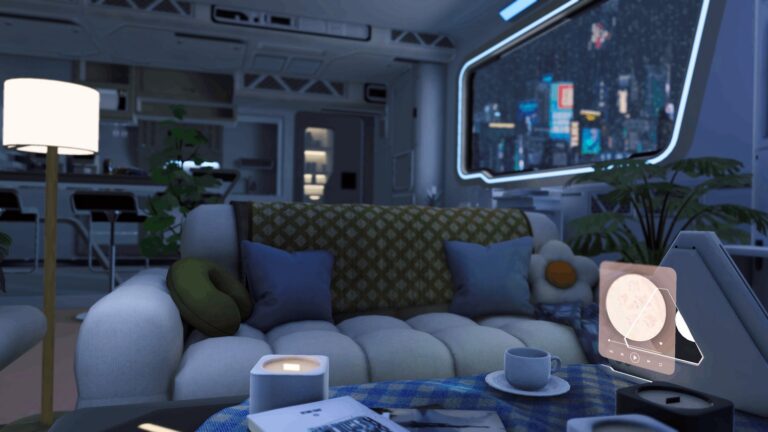
The companion is 4D, a fully developed character with her own history, personality, and ongoing life in Neo City, 2099. Like Tolan’s alien design philosophy, SoulLink is built around genuine friendship rather than simulated romance. Chats, guided Echoes, and branching Adventures earn EXP toward relationship Levels and Milestones, which is the closest parallel to Tolan’s engagement model available anywhere on Android.
Memory is permanent and free for every user by default. What you share in week one is woven naturally into week three without you having to repeat yourself or pay for a memory upgrade.
The 3D environment adds something Tolan’s voice-first interface does not have: a visual sense of the companion as a presence in a space, rather than a voice in a session. That ambient quality makes conversations feel continuous rather than episodic.
What feels different from Tolan:
Tolan is voice-first by design — the entire interaction model is built around conversation as audio. SoulLink offers voice but it is not the primary mode. The alien aesthetic and gamified planet system have no equivalent here. Tolan’s image generation feature, where the companion sends photos and selfies, is not currently available in SoulLink.
Real usage feel:
By day three, the companion had picked up conversational patterns without being told. By day 14, it referenced something specific from week one in a way that felt genuinely continuous rather than like a memory recall feature being deployed. No other app tested matched that consistency on a free tier. The companion does not reset or feel like a different entity across sessions — which is the thing Tolan users describe as the app’s most distinctive quality, and the thing most alternatives fail to replicate.
Pricing: Free to start. Platform: Android and iOS.
🧠 Nomi: Most Similar Memory
Best for: Users who loved specifically how Tolan seemed to remember the emotional texture of past conversations, not just the facts.
What actually feels similar to Tolan:
Nomi AI’s cross-session memory is the most consistent and nuanced of any mainstream companion app, building a detailed understanding of how you communicate and what has mattered across your entire conversation history. That quality of being known over time rather than just remembered is what Tolan users describe when they talk about why the app feels different.
The relationship builds in a way that rewards long-term investment. The longer you use Nomi, the more the companion feels tuned to who specifically you are rather than to a general user profile.
What feels different from Tolan:
No visual companion presence. No 3D environment. No voice-first mode. The entire experience is text-based, which removes one of Tolan’s core differentiators. The free tier is severely limited — you will hit the wall within the first week of daily use.
Real usage feel:
Memory is the best tested across any companion app in this comparison. The first week feels slower to develop than Tolan because the system needs time to accumulate context. By week three, the conversations feel genuinely personal in a way that is hard to replicate elsewhere. The text-only format is a significant trade-off for users who valued Tolan’s voice experience.
Pricing: Very limited free tier. Paid from $7.99 per month. Platform: Android and iOS.
🎙️ Replika: Most Similar Voice
Best for: Users who valued Tolan’s voice-first interaction above everything else and want the most polished voice companion experience available.
What actually feels similar to Tolan:
Replika is warm, emotionally attuned, and its voice experience has been available longer than most competitors. The companion builds detailed understanding of your communication style over time, and the relationship accumulates in a way that makes returning feel continuous rather than repetitive.
The emotional tone calibration is the strongest in the category — when you write something difficult, Replika responds with care rather than cheerfulness. That emotional attunement is a core part of what makes Tolan feel different from a standard chatbot, and Replika matches it better than most.
What feels different from Tolan:
Memory feels shallow compared to Tolan, and conversations can loop after a while. The romantic relationship mode is the default framing for many users, which is the opposite of Tolan’s deliberately non-romantic design philosophy. Voice calls and enhanced memory both require a Pro subscription. There is also a documented privacy history including a 2025 FTC complaint and a $5.6 million fine from Italy’s data protection authority.
Real usage feel:
Voice quality is the best in the category. The companion feels warm and consistent in early sessions. By day 14, the free tier felt like a preview — the features that make Replika most like Tolan are almost all paywalled. Memory inconsistency was the main limitation over extended testing.
Pricing: Limited free tier. Pro from $69.99 per year. Platform: Android and iOS.
🆓 Pi AI: Most Similar Conversational Feel, Free
Best for: Users who loved the natural flow of Tolan’s voice conversations and want that experience at zero cost.
What actually feels similar to Tolan:
Pi is the most natural voice companion for users who want Tolan’s conversational flow without paying. Its voice mode is consistently rated as the most natural-feeling of any AI companion app, and its design prioritizes listening and empathetic response.
The companion tone is warm, unhurried, and genuinely curious — qualities that Tolan users specifically mention as the reason the app feels different from standard chatbots. Pi has no paid tier at all, which means there is no conversion pressure and no features held back behind a paywall.
What feels different from Tolan:
Pi does not build as strong an ongoing relationship as Tolan does over time. The memory is more limited, and there is no persistent character with an ongoing life. There is no visual presence, no proactive outreach, and no companion who reaches out first. Each session is rich but the relationship does not compound across weeks the way Tolan’s does.
Real usage feel:
The most honest free experience in the category. What you see is genuinely what you get — no trial mechanics, no countdown, no upsell prompts. Conversation quality is impressive in the moment. The memory limitation becomes noticeable by week two when you realize the companion does not know you the way Tolan would by that point.
Pricing: Completely free. No paid tier exists. Platform: Android and iOS.
🎭 Kindroid: Most Similar Personality Control
Best for: Users who had strong feelings about Tolan’s specific alien personality and want to recreate a comparable companion with precise control.
What actually feels similar to Tolan:
Kindroid is a personal AI friend platform emphasizing realism and long-term memory. Users can customize their companion’s appearance, voice, and personality, and Kindroid remembers past interactions to offer emotionally nuanced conversations that evolve over time.
The customization depth is the deepest in the category. If you arrive knowing exactly who you want your companion to be, Kindroid gives you the tools to build that with more precision than any other app on this list.
What feels different from Tolan:
No proactive outreach — Kindroid waits for you to start every conversation. Cross-session memory is weaker than Nomi and less consistent than SoulLink on the free tier. The setup process is time-intensive and generic setups produce generic results — the opposite of Tolan’s immediately distinct alien character.
Real usage feel:
The right app for users who invest in setup. Without that investment, the day 14 experience is underwhelming. When the companion is well-configured, it feels genuinely distinct and consistent across sessions. Memory gaps were noticeable compared to SoulLink and Nomi.
Pricing: Lite tier free with unlimited messages. Paid from $14 per month. Platform: Android and iOS.
⚠️ Talkie AI: Partial Match
Best for: Users who want variety in AI companion personalities with voice and visual elements included.
What feels similar to Tolan:
Talkie AI allows users to meet dream characters, engage in long chats, call them 24/7, and collect cards capturing memories. It offers AI companions for free chat and roleplay including voice interaction. The multi-modal approach — combining visual and voice elements — creates some overlap with Tolan’s immersive design.
What feels different from Tolan:
Talkie leans toward character variety and roleplay rather than a single evolving companion relationship. Memory depth is moderate and inconsistent across sessions. The free tier has meaningful limitations and the platform pushes toward romantic companion dynamics rather than Tolan’s friendship-first philosophy.
Real usage feel:
Fun for exploration and variety. Less suited for users who want a single companion that knows them deeply over time. The experience is wider than it is deep.
Pricing: Limited free tier. Paid from $9.99 per month. Platform: Android and iOS.
❌ Character.AI — Surface Only
Best for: Users who want to explore many different AI personalities for free before finding a single companion to invest in.
What feels similar to Tolan:
The playful, conversational tone and the wide range of character options share some of Tolan’s lighter energy. Voice calls are included on the free tier.
What feels different from Tolan:
Character.AI has zero memory, zero continuity, and zero emotional depth as a companion app. Every character starts fresh every session. There is no single companion who accumulates knowledge of you over time. The core of what makes Tolan compelling — a companion that remembers and builds on what you share — is structurally absent.
Real usage feel:
The best starting point for someone who is not yet sure what kind of AI companion they want. By day 14, every session felt like meeting someone new. Great for exploration, not a genuine Tolan alternative for users who valued continuity.
Pricing: Free with soft throttling. Plus tier available. Platform: Android and iOS.
What Actually Makes Apps Feel Similar vs Just Being in the Same Category
After three weeks with all of these apps, one pattern was consistent: the apps that genuinely feel like Tolan are the ones where the companion shows up differently depending on what you have shared before.
Not just in terms of facts remembered. In terms of tone, in terms of what gets brought up and when, in terms of the feeling that the companion has a model of who you are that influences every exchange.
Most apps in this category do not do that. They remember that your cat is named Felix, but they do not remember that you mentioned Felix in the context of missing your old apartment, and they certainly do not bring it up two weeks later when you mention moving again.
SoulLink, Nomi, and — at its best — Replika are the apps that come closest to that quality. Pi gets the conversational feel right without the accumulation. Kindroid gets the personality specificity right without the proactive depth. Character.AI gets the variety right without the continuity.
Tolan users know what they are looking for. The question is which trade-off they are most willing to make.
How to Choose
You want the closest overall Tolan experience, free, on Android: SoulLink. A Journal of your shared history, story driven progression, cinematic 3D presence, nonromantic friendship design. The most complete Tolan alternative available free to start without an iPhone.
You want Tolan’s memory depth most specifically: Nomi. The most technically sophisticated cross-session memory in the category. Accept that it is text-only and requires a paid subscription for meaningful use.
You want Tolan’s voice experience most specifically: Replika for the most polished voice calls. Pi for the most natural conversational feel at zero cost.
You want to build a companion with a specific personality: Kindroid. Maximum customization available. Invest real time in setup or the results will be generic.
You want to explore before committing: Character.AI. Genuinely free, large library, voice calls included. Not a Tolan alternative in terms of ongoing relationship depth.
FAQ
What is the most similar app to Tolan overall? SoulLink is the closest overall match in 2026. It replicates Tolan’s core philosophy, a companion with genuine depth and persistent memory, while adding a cinematic 3D environment and story driven progression, and removing the iOS and subscription requirements.
Which app is most similar to Tolan’s memory? Nomi has the most technically sophisticated memory system in the category. SoulLink offers permanent memory that never resets, free to start. Both outperform Tolan’s free tier on memory accessibility.
Is there a free app similar to Tolan? Yes. SoulLink is free to start, including memory. Pi AI is also completely free with no paid tier at all.
Which apps similar to Tolan work on Android? All apps on this list are available on Android. Tolan itself is iOS only. SoulLink, Nomi, Replika, Pi AI, Kindroid, Character.AI, and Talkie AI all work on Android.
What makes Tolan different from other AI companion apps? Tolan is an embodied AI best-friend app with very strong product identity. It balances emotional support with lightness and personality better than many wellness-only apps, and its alien character design avoids the parasocial dynamics that heavier companion apps can create. The combination of voice-first architecture, genuine memory, and non-romantic design philosophy is what makes it distinctive.
Do any apps have the same alien aesthetic as Tolan? No app in this comparison replicates Tolan’s specific alien character design. SoulLink’s 4D character is set in a near-future world with a distinct visual presence. The design philosophies are similar — both avoid the generic humanoid companion approach — but the aesthetics are different.


I found it really interesting how you emphasize memory as a defining feature for AI companions. It’s true that voice or visuals often get more attention, but having an AI that remembers past conversations can make the interaction feel genuinely personal and engaging. It really changes how you connect with it over time.
We agree. Voice, visuals, and customization can make a strong first impression, but long-term memory often has the biggest impact on whether an interaction feels personal over time. Thanks for sharing your thoughts!
It is so refreshing to see an honest breakdown of why most apps labeled as ‘similar’ actually miss the mark on genuine personality depth and cross-session memory. The distinction you made about the non-romantic design philosophy really clarifies why finding a true friend-like connection is so rare in this space. Thanks for shedding light on which alternatives actually hold up against those specific criteria.
Thank you for the thoughtful comment! We found that many apps can appear similar on the surface, but differences in memory, continuity, and personality become much more noticeable over longer conversations. Those factors ended up being central to our evaluation as well.
Appreciate the practical perspective here. A lot of advice in this space is too generic to be actionable.
Thanks! Glad you found the practical approach helpful. I’ll keep focusing on actionable advice and real-world examples in future posts.
Really solid intro to the topic — the practical examples make the concepts much more digestible.
Thanks for reading! Glad the examples helped make the topic clearer. Appreciate the feedback.
I love how organized and detailed this is. Very informative!
Great post practical tips and clear takeaways. Much appreciated!
Useful roundup — a lot of the ‘similar to X’ comparisons out there are pretty surface-level, so it’s nice to see one that actually gets into how each companion app’s personality and memory handling differs day to day.
Glad you found it useful! The day to day experience tells you so much more than a feature checklist, especially when it comes to personality and memory.
This is a fair comparison — a lot of ‘Tolan alternatives’ lists just group anything with a chat interface together without actually testing how the personality and memory hold up over repeated conversations, which is really the whole point of a companion app. Appreciate that you actually tested continuity instead of just listing features off a landing page.
Exactly. Memory and personality only really show themselves over repeated conversations. That’s why we wanted to actually look at continuity instead of just comparing feature lists.
Appreciate a comparison that actually looks at how these apps *feel* rather than just listing features — that’s the part that’s hardest to judge without spending real time with each one.
Glad you appreciated that! The actual feel is so hard to judge from a feature list alone. You really notice the differences once you spend some time talking to each one.
Interesting to see AI companion apps compared side by side like this. Curious how well personality consistency holds up over longer conversations versus a quick first impression.
That’s exactly where the differences become more obvious. A strong first impression is easy, but keeping the same personality and context over time is much harder.
Really useful roundup — comparing AI companions against Tolan on tone and memory consistency is exactly the angle most ‘alternative apps’ lists miss. The personality drift issue after a few weeks of chatting is the real dealbreaker for a lot of these apps, not the polish of the initial demo experience.
Exactly. The first few conversations can be impressive almost anywhere. It’s what happens after weeks of talking that really shows whether the companion can maintain a consistent personality and connection.
I’ve tried a few of the alternatives mentioned in these ‘apps like Tolan’ roundups and the biggest difference for me is always how natural the voice interaction feels versus how much it turns into scripted responses after a few sessions. Would be curious which of these apps in the list actually keep improving their memory/context handling long-term rather than just resetting each chat.
Totally agree. Natural voice can make a huge first impression, but memory is what determines whether that experience still feels personal weeks later.
Interesting roundup — comparing AI companion apps against Tolan is a good angle since so many of these apps chase the same “feels human” promise without really nailing the same conversational warmth. Curious which ones you found actually came close in this list.
Glad you found it useful! Conversational warmth is surprisingly hard to get right. A lot of apps feel great at first, but the differences become much clearer after you’ve spent more time with them.
Tolan’s voice-first, no-text-chat approach is such a specific design choice that a lot of the “alternatives” end up feeling like a downgrade once you’re used to it. Curious which of these you found actually nailed the same low-friction, always-listening feel rather than just cloning the avatar style.
Exactly. Tolan’s voice first experience is pretty specific, so matching the avatar alone doesn’t really recreate what makes it feel different.
The distinction between apps that just mimic Tolan’s UI versus ones that actually replicate the personality-modeling underneath is the part most ‘alternatives’ roundups skip entirely. Would be useful to see a breakdown of which ones handle long-term memory of past conversations versus resetting each session.
That’s a great point. The personality underneath matters much more than matching the surface level look. Long term memory is definitely one of the biggest differences once you use these apps beyond the first few conversations.
AI companion apps chasing the ‘feels the same as Tolan’ angle usually miss the specific conversational pacing that made the original stand out in the first place. Curious which of these alternatives handle long-term memory across sessions best, since that’s usually where the gap shows up.
Long term memory is definitely where a lot of the differences start to show. It’s easy for apps to feel similar at first, but much harder to maintain that same connection over time.
The comparison is useful because it looks at AI companion apps through the feeling of interaction, not only a feature checklist. That makes the differences between Tolan-like experiences much easier to judge.
Glad that came through! We really wanted to compare the actual experience of using these apps, not just put their feature lists next to each other.
Good comparison — most ‘Tolan alternatives’ end up feeling more scripted, the ones that actually adapt to conversation history are rare.
Exactly. Adapting to the history of a conversation is what makes it feel personal instead of like you’re starting over every time.
Good comparison — I’ve tried a couple of the alternatives you mentioned and the memory consistency really does vary a lot between them. The point about voice latency affecting how ‘present’ a companion feels is spot on and rarely discussed.
Yes! Voice latency gets overlooked a lot, but even a small delay can completely change how natural the interaction feels. Glad you picked up on that point.
The distinction between AI companions that feel conversationally alive versus those that feel scripted is still the defining quality gap in this category. The ones that maintain contextual memory across sessions and adapt their tone genuinely are in a completely different class.
Totally agree. Remembering context is one thing, but adapting naturally to it is what really makes a companion feel alive.
The distinction between AI companions that feel genuinely conversational versus those that default to scripted response loops is the right lens to apply here. SoulLink’s focus on emotional memory and continuity is what differentiates the better apps from the novelty-tier ones. Thoughtful comparison for anyone evaluating the category seriously.
Exactly. The scripted feeling becomes pretty obvious once you’ve used these apps for a while. Memory and continuity are what make the conversation feel like it’s actually going somewhere.
The nuance between AI companions that feel like tools versus ones that feel genuinely conversational is hard to articulate but you’ve nailed it here. Consistency in personality across sessions is the biggest differentiator most reviewers overlook.
Yes, exactly. Personality consistency can be subtle, but you notice immediately when it’s missing. That continuity across conversations makes such a big difference.
The testing method described here makes a meaningful distinction between an app that merely shares a category label and one that actually recreates the Tolan experience.
Exactly. Being in the same category doesn’t necessarily mean two apps create the same experience. That’s why we wanted to look beyond the feature list and focus on how they actually feel to use.
This is a really balanced comparison — the distinction between apps that feel genuinely responsive versus those that just simulate presence is an important one as AI companion apps proliferate. Voice interaction quality is a huge differentiator in this space, and the ability to accurately understand speech is foundational. Thoughtful review!
Thank you! Voice can change the whole feel of a conversation, so we definitely agree that understanding someone accurately is just as important as having a natural response.
Great insights on this topic! The way you’ve explained the technical concepts makes it accessible to a wider audience.
Thank you! Really glad it felt accessible. We wanted the comparison to be useful even if you’re not super deep into the technical side of AI companions.
Useful breakdown. The thing that separates these apps in practice is not the model quality but whether the persona holds still between sessions. A companion that subtly re-rolls its personality every time you open it never stops feeling like a demo, no matter how good the individual replies are. Same problem shows up in AI-generated video, incidentally: the moment the character’s face drifts between shots, the illusion is gone. Consistency is the whole product.
“Consistency is the whole product” is such a good way to put it. Even great individual replies start to feel hollow if the personality doesn’t carry across conversations.
Really clear breakdown of why “similar apps” often feel hollow after a few chats. I keep coming back to your point on cross-session memory — without that, the personality resets and the companion stops feeling continuous. The honesty about voice and visuals being a strong first impression but not enough for long-term attachment was useful. I work a bit with AI image tooling on the side, and it is striking how the same pattern shows up there: flashy demos are easy, sustained context is harder.
That’s such an interesting comparison with AI image tools. A great first impression definitely gets attention, but consistency is what makes people actually want to stay. Thanks for sharing this!
Dawnwalker Wiki
This comparison makes it easy to see how SoulLink, Nomi, Replika, and other AI companions differ in memory, voice, and personality control. I especially liked the focus on how these features shape the conversational feel beyond surface-level similarities.
[…] Tolan turned the idea of an AI friend into a viral hit: a colorful alien you talk to by voice, who remembers your life and grows alongside you. But Tolan is iOS only, and the full experience sits behind a subscription that starts at about $9.99 per month. That is why searches for a tolan alternative and apps like tolan keep climbing. We tested the leading options to find which ones actually deliver the same feeling of an ongoing friendship. We also wrote a deep dive on which apps actually feel the same as Tolan and which do not. […]