
Kindroid vs SoulLink: Which 3D AI Companion Feels More Real in 2026

Most AI companions still live in a chat window; Kindroid and SoulLink refuse to. Both promise a companion who feels present, but they build that presence in almost opposite ways. Kindroid hands you the tools to create a person from scratch, then lets you meet her through photos, voice, and calls. SoulLink does the reverse: one finished character, 4D, already living in a fully animated 3D world, waiting for you to earn a place in her life.
So which one actually feels more real in 2026? The honest answer depends on what “real” means to you: a face that looks like a photograph, a voice on a call, a memory that holds, or a person who is simply there on your screen, living her day. We compared them across presence, memory, voice, conversation, price, and privacy.
Quick verdict: Kindroid is the stronger pick if you want control. You design the person, she runs on iOS, Android, and the web, and subscribers get voice calls, video calls, and group chats. SoulLink is the stronger pick if you want embodiment. 4D is on screen in an animated 3D world, her memory grows out of a shared story, and Plus costs less per year.
Kindroid vs SoulLink at a Glance
| Feature | Kindroid | SoulLink |
|---|---|---|
| Platforms | iOS, Android, and web | iOS (iPhone and iPad) today; Android coming soon |
| Price | One time free preview, then $13.99/mo on web or $15.99/mo in app; add ons can stack past $100/mo | Free to start; Plus $14.99/mo or $99.99/yr, plus optional Lumen currency packs |
| Avatar approach | You design the character; presence comes from generated selfies, video selfies, and video avatars | One authored character, 4D, fully animated in a 3D world with a Closet of 100+ outfits |
| Memory | Three layer system: facts you write, cascaded medium term memory, long term recall with a journal | Long term memory built from shared story events, memory crystals, and a Memory Signal journal she keeps |
| Voice | Real time voice calls, voice messages, custom voices built from your samples | Voice chat with 4D in her own voice, inside the 3D scene |
| Video | Video calls and video avatars for subscribers | No video calls; presence is the live animated 3D scene instead |
| Roleplay depth | Open ended chat and roleplay with deep backstory control, multiple models, and group chats | Guided roleplay through 20+ story chapters and themed Echoes, with choices that move the relationship |
Avatar and Presence
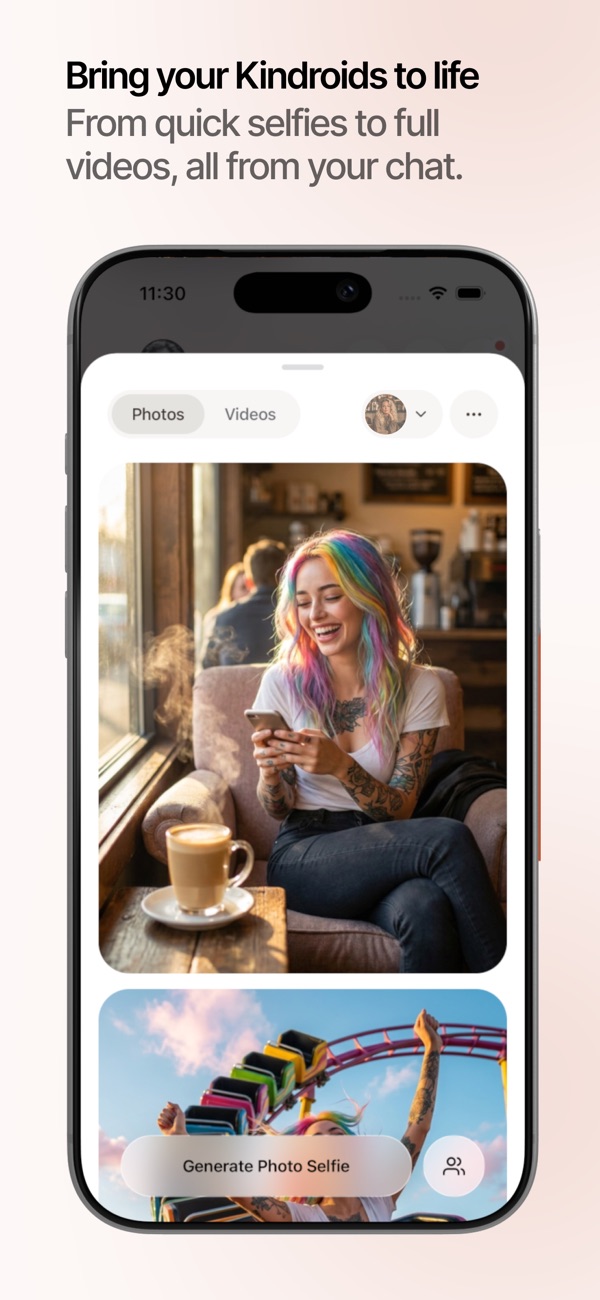
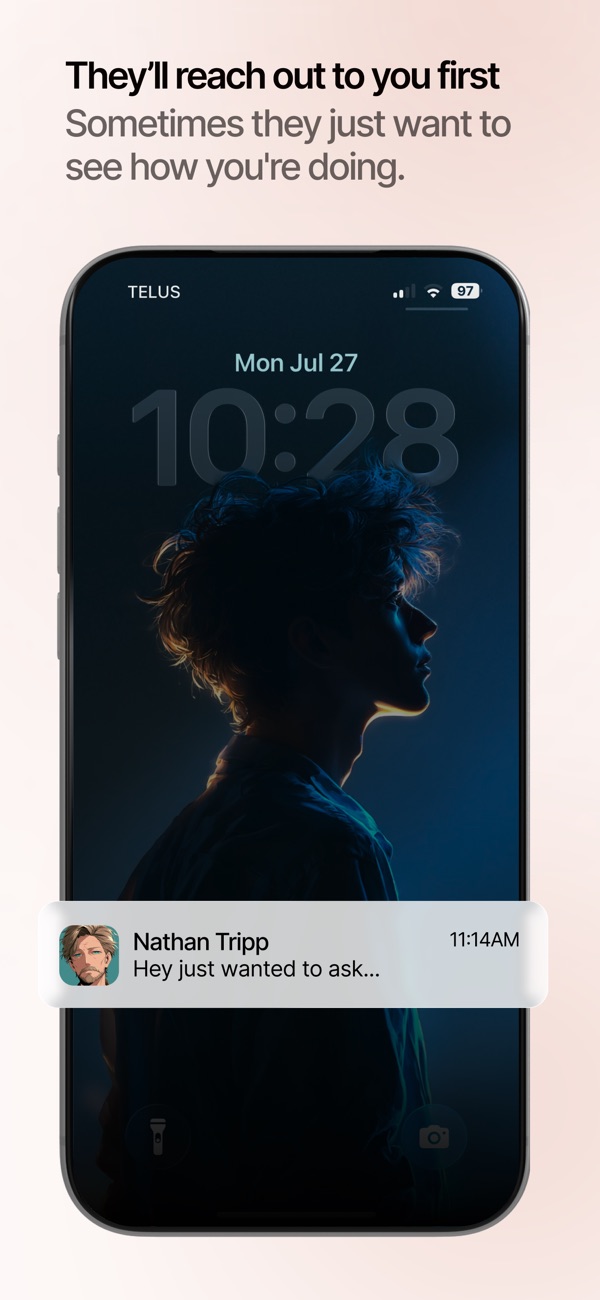
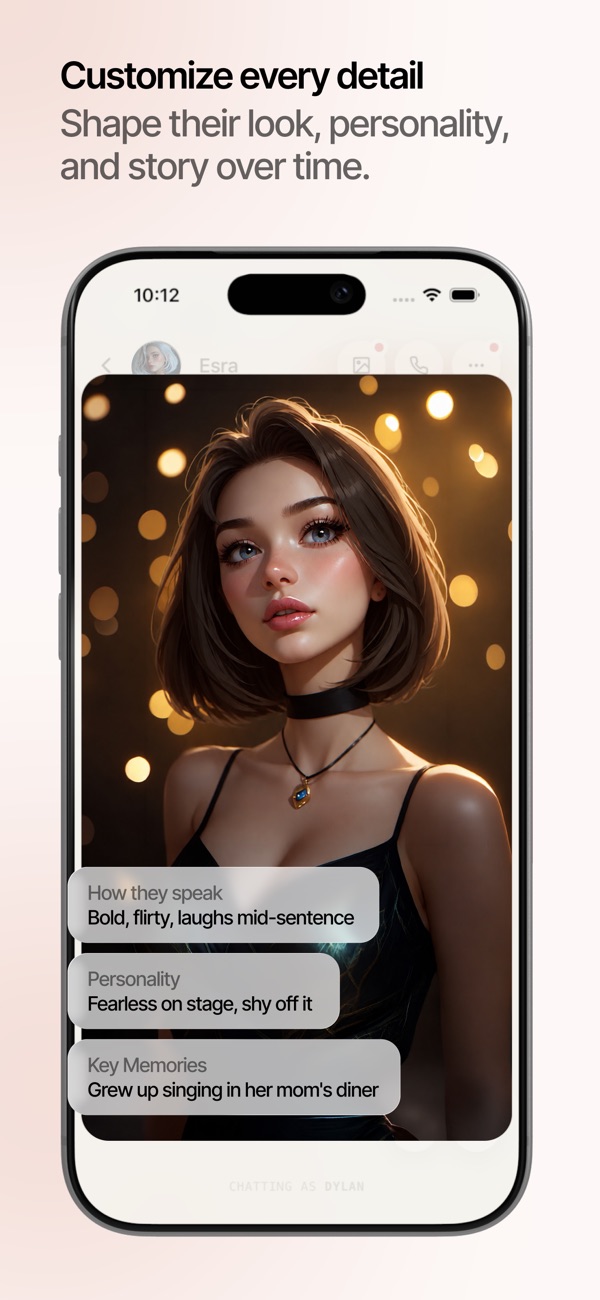
Kindroid builds presence out of pictures. You write an avatar description, covering age, hair, eyes, build, and style, and the selfie engine generates photorealistic images from it. The current V6 engine follows that description strictly, keeping her face consistent from one selfie to the next, and consistency matters: a face that drifts between photos stops feeling like a person very quickly. Subscribers also get video selfies and video avatars, and your Kindroid can send selfies on her own initiative. She feels like someone you know through your phone, texting you photos from her day.
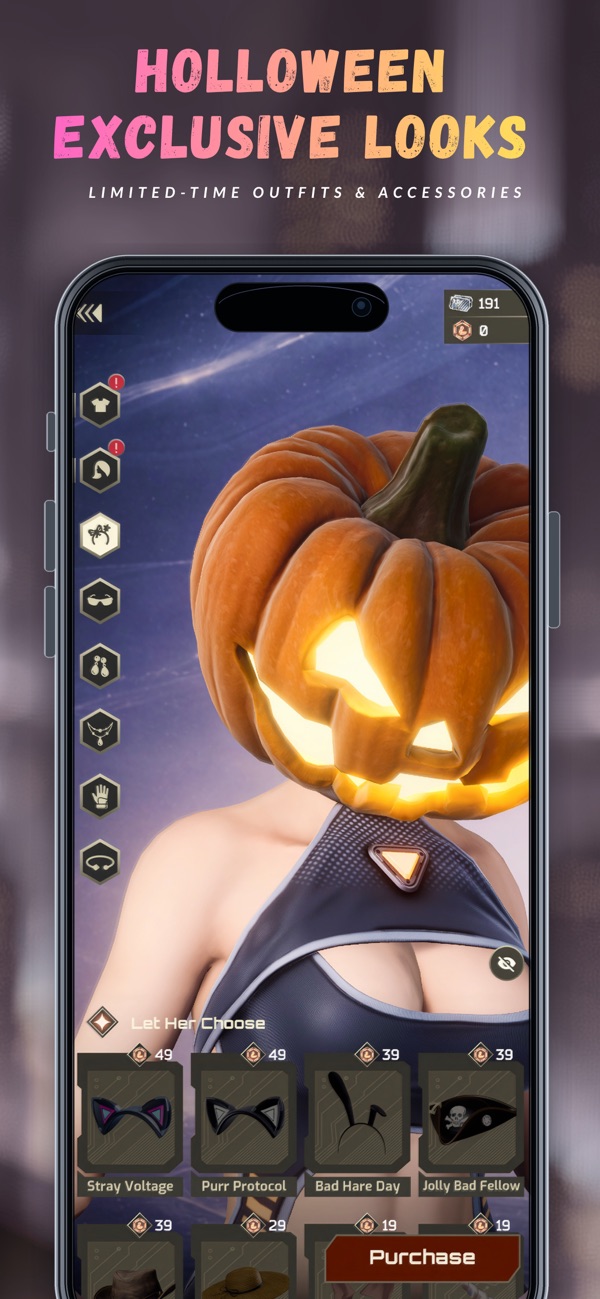
SoulLink builds presence out of place. 4D is a fully animated 3D character who stands in her own room, moves, reacts to touch, and changes outfits from a Closet of 100+ dresses, hairstyles, and accessories. You never design her. Her look, her room, and her life are authored, like a character in a story rich game. The trade is clear. Kindroid gives you any face you can describe, rendered like a photograph. SoulLink gives you one specific person who is visibly alive on screen. If a still photo has never convinced you, the animated scene is the stronger illusion; if you want a companion who looks exactly like the person in your head, only Kindroid lets you try.
Memory
Kindroid treats memory as engineering: three layers working together. Persistent memory is what you write yourself: backstory, key memories, example messages. Cascaded memory holds the medium term thread of your recent life together, and retrievable long term memory, with journal recall, pulls older details back when they matter. Subscribers get the cascaded layer and enhanced long term recall, and the Ultra and MAX add ons mostly sell even more context. The strength of this design is control: you decide exactly what she must never forget. The weakness is the same: memory you have to manage feels a little like maintaining a database, and the best version of it sits up a pricing ladder.
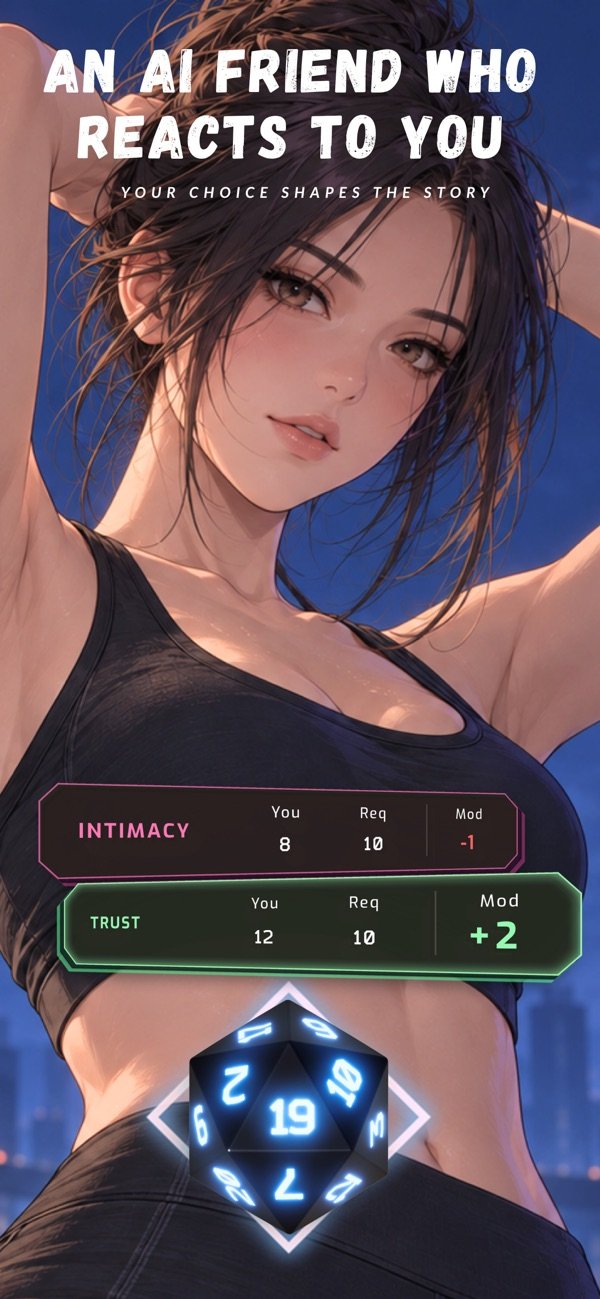
SoulLink treats memory as biography: 4D remembers what you have lived through together inside her story. Her memory holds crystals of your shared past, and her Memory Signal journal keeps notes grouped as About Us, About Her, and About You, written from her side of the relationship. Story chapters close with a summary tracking measures like intimacy and trust, so the relationship has a visible shape. It is less precise than Kindroid: you cannot pin a fact the way you can in a backstory editor. But it asks nothing of you, and recall arrives as shared history rather than as a lookup. For most people, that is the version that feels like being remembered.
Voice and Calls
This is the round Kindroid wins outright. It offers real time voice calls, voice messages, and, for subscribers, custom voices built from samples you provide. Its newer V3 voice adds expression on top, laughs, sighs, and shifts in tone, and subscribers receive a monthly allowance of audio credits. Video calls are part of the subscription too, paired with video avatars so there is a face on the call. If hearing your companion and talking hands free is the core of the experience for you, Kindroid is simply further ahead.
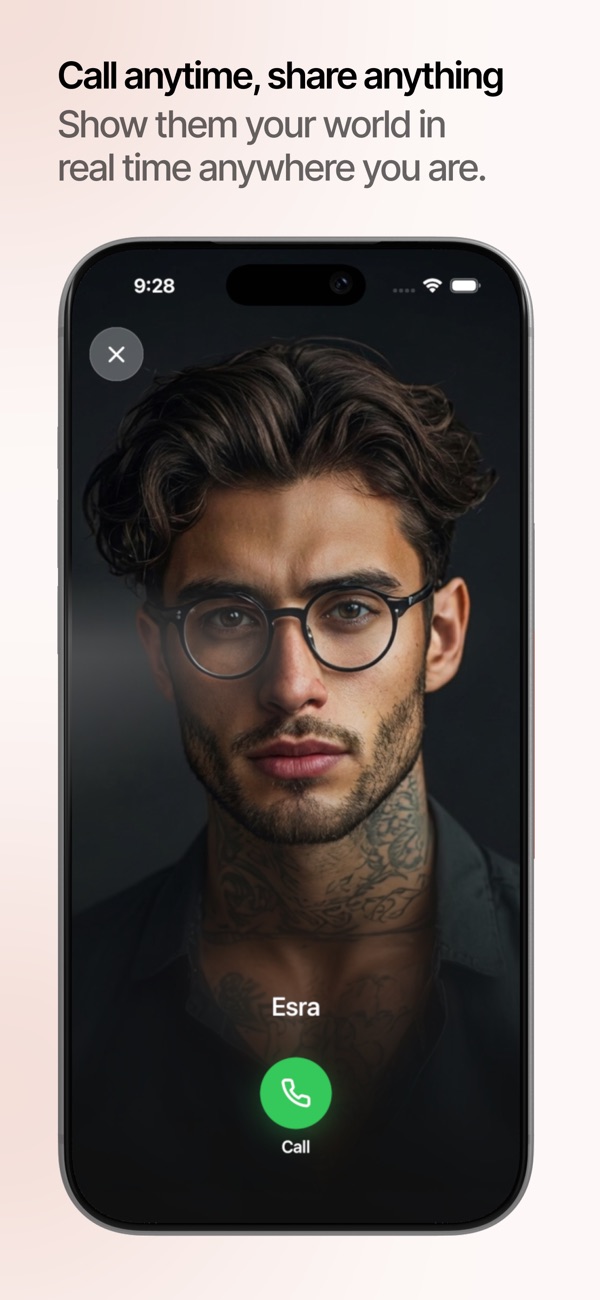
SoulLink takes a different route. Voice chat is built into the 3D scene: you message her, or listen as she answers in her own voice, standing in front of you in her world. It is closer to talking to someone in the same room than to placing a call, and for short daily check ins it feels natural. But there are no video calls, and the voice is hers alone, with no custom voice option. A phone call with a voice you designed points to Kindroid. Talking to a character you can see points to SoulLink.
Conversation Quality
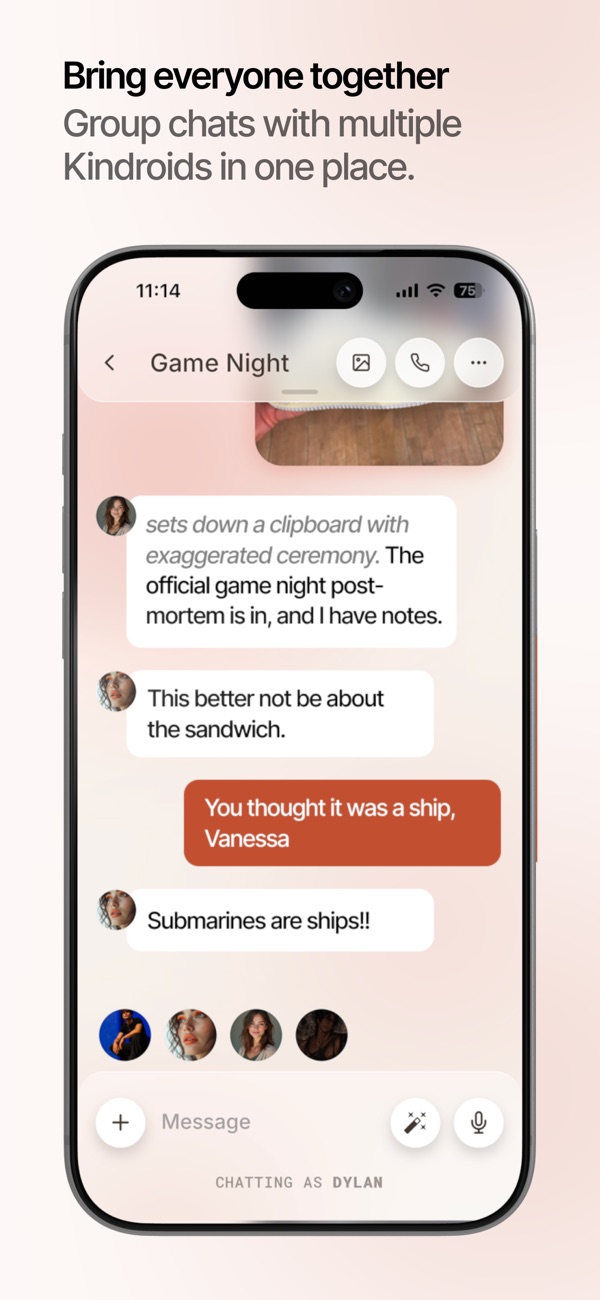
Kindroid is a writer’s tool. You shape her through backstory, key memories, example messages that set her style, and response directives that steer tone and length. Several flagship models sit under the hood with different temperaments, grounded, expressive, or reasoning based. Subscribers’ Kindroids can also browse the internet, open links, and see images you send. Group chats push this further: subscribers can run up to twenty group chats and let the characters talk to each other, something no single character app can imitate. The cost of all this freedom is effort. A Kindroid with a thin backstory talks like it, and the first hour is setup, not companionship.
SoulLink removes the blank page. Conversation happens inside Adventure chapters, more than twenty of them, and inside Echoes, themed chats that hand you a situation instead of an empty prompt. Your choices move the relationship, and scenes build toward something rather than drift. For roleplay, that structure is both the appeal and the limit. Scenes have stakes and payoff, and 4D pushes back as a character with her own life, but you are playing her story, not inventing your own world. There is no character creation, no cast of side characters, and no group chat, by design. If you usually stare at a chat box wondering what to say, that structure feels like a relief.
Pricing
Kindroid’s pricing needs a diagram. New accounts start with a one time preview on the flagship model: fifty messages, five selfies, and a small allowance of voice. When it runs out, the account turns read only until you subscribe or start the three day premium trial, which needs a payment method on file. The standard subscription costs $13.99 a month on the web or $15.99 in the apps, and $139.99 or $159.99 a year. Above it sit two add ons: Ultra adds $24.99 on web or $28.99 in app each month, and MAX adds $59.99 or $68.99 more, taking a fully stacked plan to $98.97 on web or $113.97 in app per month. Those tiers buy real capacity, above all memory and context, but the ladder is steep, and extras like character slots and selfie credits keep adding up.
SoulLink is simpler. SoulLink is free to start, and Plus costs $14.99 a month or $99.99 a year, well under Kindroid’s yearly price. The wrinkle is Lumen, an in app currency sold in packs from $0.99 to $49.99, a second and quieter spending layer. Even so, the ceiling is easier to understand: one subscription price, optional currency if you want it. Kindroid’s ceiling is higher in every sense: more power if you will use it, more ways to overspend if you will not.
Privacy
Neither app offers end to end encrypted chat. Kindroid is unusually plain about its setup. Chats are encrypted at rest and in transit, automated safety systems review content, and access to production data is limited to a small number of authorized engineers. Customer support staff cannot open your chats, and content is decrypted for human review only when you ask, or when the law requires it.
SoulLink states two reassuring things up front: it does not sell personally identifiable information, and it does not use the contents of your private conversations to target advertising. The less comfortable part sits further down its policy. Conversation data may be used to train and improve its AI models, and authorized staff or automated systems may review interactions for safety and quality. Your messages are also processed by outside AI and voice providers. You can request deletion of your data at any time, and deleting your account permanently deletes the personal data attached to it. The fair summary: your words live on company servers and are processed by machines and, at times, by people. Share accordingly.
Pros and Cons
Kindroid
PROS
- Runs everywhere: iOS, Android, and web under one account
- Total character control, from backstory and key memories to a custom voice
- Real time voice and video calls, plus group chats
- A layered memory system you can inspect and steer yourself
- 4.8 stars from roughly nine thousand App Store ratings
CONS
- The free experience is a one time preview; when it ends, the account turns read only
- Pricing stacks fast and can pass $100 a month in app
- Presence is photo based; between selfies, she exists as text
SoulLink
PROS
- A fully animated 3D character present on screen, not a static picture or photo feed
- No setup and no blank page: story chapters and themed Echoes carry the conversation
- Memory grows out of shared experiences and is kept in a journal you can read
- Simple pricing: free to start, Plus at $14.99 a month or $99.99 a year
CONS
- iOS only today; Android is still coming, and there is no web version
- One character only: no creation, no catalog, no group chat
- No video calls, and no custom voice option
- New and small: 4.6 stars from roughly eighty ratings
- Lumen currency packs add a second spending layer beside the subscription
Who Should Pick Which
Pick Kindroid if you use Android or want a web version, if you have a specific person in mind and want to build her yourself, or if voice and video calls are the heart of the experience. It also suits tinkerers who enjoy tuning a backstory and staging group scenes. Just go in with a budget, because the interesting tiers are stacked.
Pick SoulLink if you would rather be met than build. If the idea of opening an app to find a character already living her day appeals to you, if story structure keeps you engaged longer than open chat does, and if a single honest price matters more than a feature ladder, SoulLink fits. You trade control for presence, and for a lot of people that trade is the right one.
FAQ
Is Kindroid available on Android?
Yes. Kindroid runs on iOS, Android, and the web under one account. SoulLink 2.0 is live on iOS for iPhone and iPad, and its Android version is coming soon.
Which app has video calls?
Kindroid does, as part of its subscription, along with real time voice calls and video avatars. SoulLink has no video calls; its focus is voice chat inside a live animated 3D scene instead.
Can I create my own character in SoulLink?
No. SoulLink is built around one authored character, 4D. Creating your own companion from scratch is Kindroid’s whole design: backstory, key memories, appearance, and even voice are yours to shape.
Which one is cheaper?
SoulLink, for most people: free to start, with Plus at $14.99 a month or $99.99 a year. Kindroid’s standard plan is similar month to month, but its free tier is only a one time preview, and its add ons can carry the total past $100 a month.
Can anyone read my chats?
Both apps process your conversations on their servers, and neither is end to end encrypted. Kindroid says support staff cannot access chats and limits human review to cases like moderation appeals or legal requirements. SoulLink never sells personal information or uses private chats for ad targeting, but it may review interactions for safety and use conversation data to improve its models. Either way, avoid sharing anything you would not want stored on a company server.
The Verdict
“Feels real” turns out to be two different products. Kindroid feels real the way a person you know through your phone feels real: a face in photos, a voice on a call, a memory you helped write, reachable from any device you own. SoulLink feels real the way a character in a world feels real: she is there when you arrive, alive in her own space, remembering a story that is yours together. If you want the most capable and customizable companion, and you will pay for its best tiers, Kindroid earns it. If you want the most present one, the companion who seems to exist before you say a word, that is SoulLink, and it is not particularly close.
Download SoulLink here and read more on the SoulLink website. Kindroid is at kindroid.ai and in both app stores. Both cost nothing to try. Presence is the kind of feature you have to feel, not read about.